Helping the FRA explore ways to improve their software delivery
A few weeks ago, Jimmy Nilsson was invited to FRA, the National Defence Radio Establishment, which plays an important role in Sweden’s total defence. Using the DORA metrics as a lens, Jimmy led a workshop to explore possibilities to improve their software delivery even further.
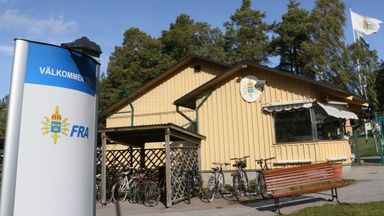
I was seriously starstruck when I visited FRA to deliver the workshop we prepared together. Being able to assist a key player in our total defence in even a small way felt important to me.
If you’re curious about what it’s like inside the FRA, there are a few unique features, such as the security clearance process. But once inside, it felt like working with any other organisation. I met friendly, committed, high-performing co-workers who were keen to make a difference. In the end it’s about people, even at the FRA, and we tend to have a lot in common.
The workshop focused on how FRA can further improve its software delivery capabilities. The workshop was generic; I have no insight whatsoever into their operations. On the other hand, I don’t need any details about an organisation to say with certainty that it has the potential to become even better in one or more of the areas we discussed.
The workshop was called “How can DORA help me in my day-to-day work?” Here's what we covered:
Flow has been described as a state of deep, almost meditative immersion accompanied by mild euphoria, in which one loses all sense of time1. Most developers recognise this feeling, and know that this is when the best solutions are born, the ones that genuinely delight users.
That’s the ideal, and it ought to be achievable. But in reality, frustration, friction, roadblocks, and constant context switching are more common. In such conditions, good solutions often fail to materialise. Instead, you leave work on Friday without the feeling of a week well spent. In the worst case, it can even affect your health.
The State of DevOps report series started in 2013, and a few years later, the DevOps Research and Assessment (DORA) team was formed. They use surveys from tens of thousands of participants to study how DevOps practices predict both organisational success and team wellbeing. In 2018, the founders summarised their findings in the book Accelerate2. The results provide evidence-based indicators of what actually drives healthy, high-performing teams.
During the workshop, we took a closer look at the four key metrics highlighted in Accelerate and used them as a lens to ask the right questions. We went through typical everyday obstacles that disrupt flow and are actually within our control. Finally, we focused on how to overcome these obstacles and the unexpected positive side effects this brings.
1 DeMarco, Lister: Peopleware (1987)
2 Forsgren, Humble, Kim: Accelerate (2018)
The organisations that excel at software delivery are also the ones that work the hardest to improve even further (which may sound a bit contradictory). I think the key is to get the flywheel turning so continuous improvement can take hold. The hardest part is getting started and building sustainable momentum. But once you've achieved that, it's almost unstoppable.
Both for myself and Sweden, I was genuinely delighted after meeting the team. There was so much drive and expertise. Thank you, FRA, for an inspiring workshop!